With the advent of 16-bit and 32-bit consoles, home video games began to approach the level of graphics seen in arcade games. An increasing number of players would wait for popular arcade games to be ported to consoles rather than going out.
As patronage of arcades declined, many were forced to close down.
Fourth Generation Consoles
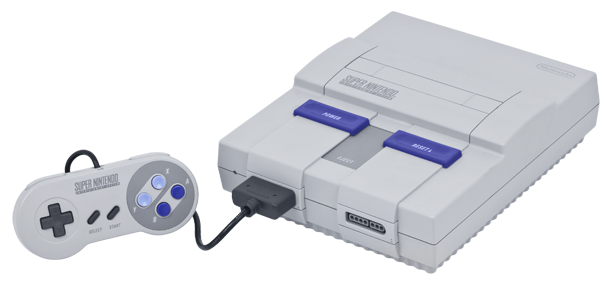
The SNES and Sega Genesis battled for the top console of the fourth generation. Sega initially had a hard time overcoming Nintendo's ubiquitous presence in the American consumer's home, but in 1991 they came out with Sonic the Hedgehog which greatly increased Sega's popularity. Sega also used the term "Blast Processing" because their CPU was clocked at a higher speed than the SNES.
The SNES was a global success, becoming the best-selling console of the 16-bit era despite its relatively late start. The SNES remained popular well into the 32-bit era, and continues to be popular among fans, collectors, retro gamers, and emulation enthusiasts.
Fifth Generation Consoles
In 1994, two new consoles were released the Sega Saturn, the PlayStation. The PlayStation quickly outsold all of its competitors, with the exception of the aging Super Nintendo Entertainment System, which still had the support of many major game companies.
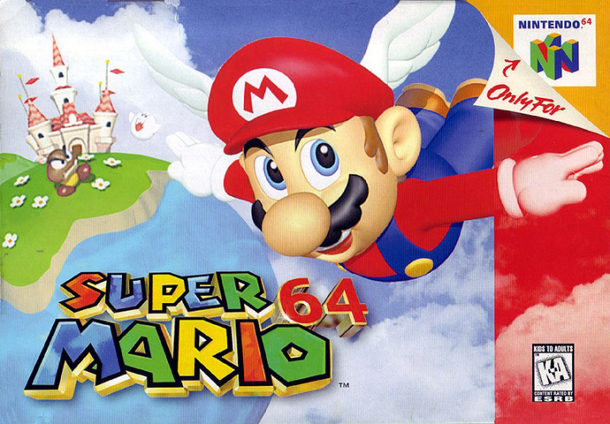
Nintendo released its 64-bit console, the Nintendo 64 in 1996. The console's flagship title, Super Mario 64, became a defining title for 3D platformer games.
During this time, most consoles moved to the CD inplace of the cartidge, the Nintendo 64 was the expection.
The fifth generation is most famous for it being the first generation to fully embrace 3D games. Their 3D environments were widely marketed and they steered the industry's focus away from side-scrolling and rail-style titles.